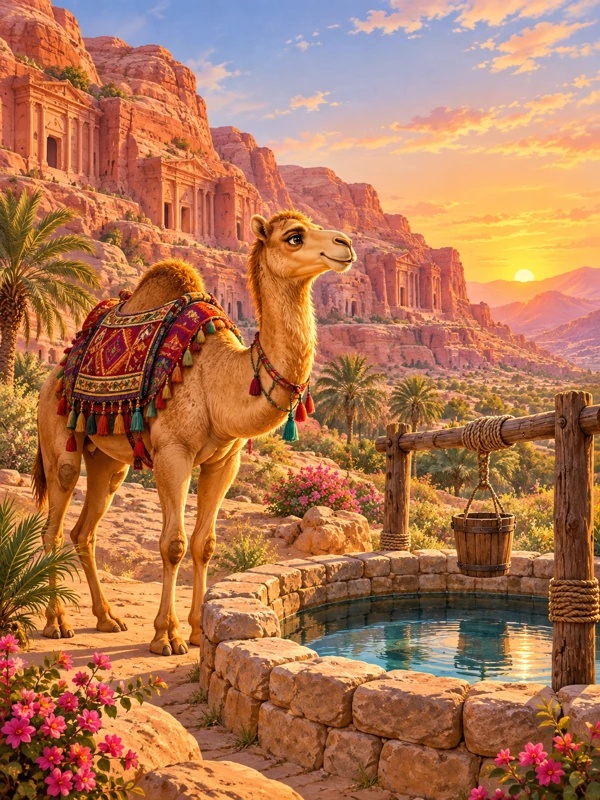
অনেক কাল আগে, পাথুরে পাহাড়ে ঘেরা এক শুকনো উপত্যকা। সেখানে গাছ নেই, ঘাস নেই, জল নেই, মানুষও নেই। আল্লাহর আদেশে ইবরাহিম (আ.) তাঁর স্ত্রী হাজেরা (আ.) আর ছোট্ট শিশুপুত্র ইসমাঈল (আ.)-কে সেখানে রেখে গেলেন। সঙ্গে দিলেন এক থলে খেজুর আর এক মশক পানি।
Long ago there was a dry valley surrounded by rocky hills. It had no trees, no grass, no water and no people. By Allah's command, Ibrahim (peace be upon him) left his wife Hajar and their baby son Ismail (peace be upon him) there, with a bag of dates and a waterskin.
হাজেরা (আ.) জিজ্ঞেস করলেন, “আল্লাহ কি আপনাকে এমন করতে আদেশ করেছেন?” ইবরাহিম (আ.) বললেন, “হ্যাঁ।” হাজেরা (আ.) শান্ত মনে বললেন, “তাহলে তিনি আমাদের ধ্বংস হতে দেবেন না।” দূরে গিয়ে ইবরাহিম (আ.) দোয়া করলেন, “হে আমাদের রব, আমি আমার সন্তানদের কিছুজনকে তোমার সম্মানিত ঘরের কাছে এক অনুর্বর উপত্যকায় রেখে গেলাম। মানুষের মন তাদের দিকে ঝুঁকিয়ে দাও, আর তাদের ফলফলাদি দিয়ে রিজিক দাও।”
Hajar asked, “Has Allah commanded you to do this?” Ibrahim said, “Yes.” Calmly Hajar replied, “Then He will not let us be lost.” Further away, Ibrahim prayed: “Our Lord, I have settled some of my children in a barren valley near Your Sacred House. Make people's hearts incline towards them, and provide them with fruits.”
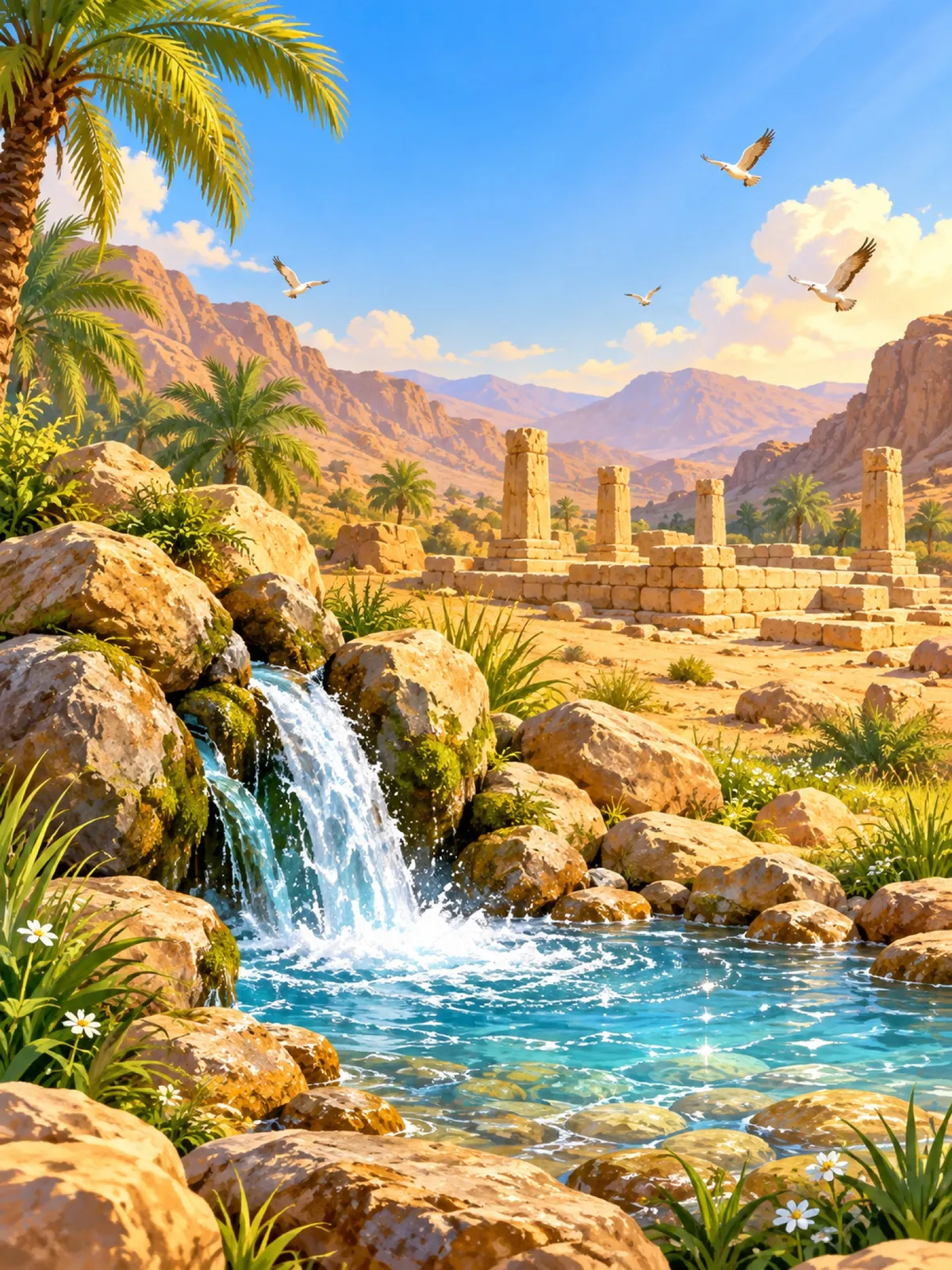
কিছুদিন পর পানি ফুরিয়ে গেল। তৃষ্ণায় শিশু ইসমাঈল কাঁদতে লাগলেন। মা ছুটে উঠলেন সাফা পাহাড়ে, তারপর মারওয়া পাহাড়ে—কোথাও কেউ আছে কি না, কোথাও পানি আছে কি না। এভাবে সাতবার দৌড়ালেন। তখন আল্লাহর পাঠানো এক ফেরেশতা মাটিতে আঘাত করলেন, আর সেখান থেকে কলকল করে বেরিয়ে এল পানি। এই পানির নাম জমজম। মা আর ছেলে প্রাণভরে পানি পান করলেন।
After some days the water ran out. Baby Ismail cried with thirst. His mother ran up the hill of Safa, then the hill of Marwa, looking for anyone, for any water at all. She ran between them seven times. Then an angel sent by Allah struck the ground, and water came bubbling out. This water is called Zamzam. Mother and son drank their fill.
পানির খোঁজ পেয়ে আকাশে পাখিরা উড়তে লাগল। পাখি দেখে জুরহুম গোত্রের লোকেরা এসে সেখানে থাকার অনুমতি চাইল। হাজেরা (আ.) অনুমতি দিলেন। ধীরে ধীরে নির্জন উপত্যকায় গড়ে উঠল জনপদ। ইসমাঈল (আ.) তাদের মধ্যেই বড় হলেন, তাদের কাছে আরবি ভাষা শিখলেন। সবাই তাঁকে ভালোবাসত।
Birds began to circle above the water. Seeing them, people of the tribe of Jurhum came and asked to settle there, and Hajar agreed. Slowly the empty valley became a town. Ismail grew up among them and learned Arabic from them, and everyone loved him.
ইসমাঈল (আ.) যখন বাবার সঙ্গে চলাফেরা ও কাজ করার মতো বড় হলেন, তখন এল আরেক বড় পরীক্ষা। ইবরাহিম (আ.) বললেন, “প্রিয় পুত্র, আমি স্বপ্নে দেখেছি যে আমি তোমাকে কুরবানি করছি। এখন তুমি বলো, তোমার মত কী?” ইসমাঈল (আ.) বললেন, “বাবা, আপনাকে যা আদেশ করা হয়েছে, তা-ই করুন। ইনশাআল্লাহ, আপনি আমাকে ধৈর্যশীলদের মধ্যে পাবেন।”
When Ismail was old enough to walk and work beside his father, another great test came. Ibrahim said, “My dear son, I have seen in a dream that I am sacrificing you. Tell me, what do you think?” Ismail replied, “Father, do what you have been commanded. If Allah wills, you will find me among the patient.”
দুজনেই যখন আল্লাহর আদেশের কাছে নিজেদের সঁপে দিলেন, আর ইবরাহিম (আ.) পুত্রকে শুইয়ে দিলেন, ঠিক তখনই আল্লাহ ডাক দিলেন, “হে ইবরাহিম, তুমি স্বপ্নকে সত্যে পরিণত করেছ।” আল্লাহ ইসমাঈল (আ.)-এর বদলে দিলেন এক মহান কুরবানি। এটি ছিল এক সুস্পষ্ট পরীক্ষা, আর পিতা-পুত্র দুজনেই তাতে সফল হলেন। আজও ঈদুল আজহায় মুসলমানেরা এই আনুগত্যের কথা স্মরণ করে।
When both of them had surrendered to Allah's command and Ibrahim had laid his son down, at that very moment Allah called out, “O Ibrahim, you have fulfilled the dream.” Allah ransomed Ismail with a great sacrifice. It was a clear test, and father and son both passed it. To this day, Muslims remember this obedience at Eid al-Adha.
পরে আল্লাহর আদেশে পিতা-পুত্র মিলে কাবাঘর নির্মাণ করলেন। ইসমাঈল (আ.) পাথর বয়ে আনতেন, আর ইবরাহিম (আ.) গাঁথতেন। দেয়াল উঁচু হলে ইবরাহিম (আ.) একটি পাথরের ওপর দাঁড়িয়ে কাজ করতেন। কাজ করতে করতে দুজনে দোয়া করতেন, “হে আমাদের রব, আমাদের এই কাজ কবুল করুন। নিশ্চয়ই আপনি সব শোনেন, সব জানেন।”
Later, by Allah's command, father and son built the Kaaba together. Ismail carried the stones and Ibrahim laid them. When the walls grew high, Ibrahim stood on a stone to keep building. As they worked, they prayed, “Our Lord, accept this from us. You are the All-Hearing, the All-Knowing.”
কুরআনে আল্লাহ ইসমাঈল (আ.)-এর প্রশংসা করেছেন। তিনি ছিলেন প্রতিশ্রুতি রক্ষায় সত্যনিষ্ঠ, একজন রাসুল ও নবী। তিনি পরিবারের লোকদের নামাজ ও জাকাতের আদেশ দিতেন, আর তিনি ছিলেন তাঁর রবের সন্তুষ্টিপ্রাপ্ত।
In the Qur'an, Allah praises Ismail. He was true to his promise, a messenger and a prophet. He told his family to pray and give zakat, and his Lord was pleased with him.
শিশুকালের তৃষ্ণা, কঠিন পরীক্ষা, কাবাঘর নির্মাণের পরিশ্রম—সব সময়েই ইসমাঈল (আ.) ধৈর্য ধরেছেন আর আল্লাহর ওপর ভরসা রেখেছেন। আমরাও কঠিন সময়ে ধৈর্য ধরব, বাবা-মায়ের ভালো কাজে সাহায্য করব, আর কথা দিলে কথা রাখব।
In the thirst of his childhood, in his great test and in the hard work of building the Kaaba, Ismail was always patient and trusted Allah. We too can be patient in hard times, help our parents in good work, and keep our promises.
⭐ গল্পের শিক্ষাThe lesson
আল্লাহর ওপর ভরসা, ধৈর্য, আনুগত্য আর প্রতিশ্রুতি রক্ষা।Trust in Allah, patience, obedience and keeping one's promises.
🌟 শেষ!The End! 🌟