১৯৭১ সাল। মার্চের শেষ দিকে কিশোর রাশেদ তার ছোট্ট নীল মলাটের খাতার প্রথম পাতায় গোটা গোটা অক্ষরে লিখল—“আজ থেকে যা দেখি, যা মনে রাখা দরকার, সব লিখে রাখব।” জানালার বাইরে তখন চেনা পৃথিবীটা দ্রুত বদলে যাচ্ছিল। স্কুল বন্ধ, রাস্তাঘাট ফাঁকা, বড়দের মুখে চাপা উদ্বেগ।
It was 1971. Near the end of March, a teenager named Rashed wrote in large, careful letters on the first page of his small blue notebook: “From today, I will write down everything I see and everything that must be remembered.” Outside his window, the familiar world was changing fast. Schools were closed, the roads were empty, and the grown-ups wore quiet, worried faces.
ডায়েরির পাতায় দিন গড়াতে লাগল। কোনো দিন লেখা—“আজ দূর থেকে গোলমালের শব্দ এসেছে। মা সারারাত জেগে ছিলেন।” কোনো দিন—“তাড়াহুড়ো করে বাড়ি ছাড়তে হলো। একটা পুঁটলিতে কয়েকটা জামা, চিড়া-গুড় আর এই খাতাটা নিয়েছি।” আবার কোনো দিন—“অচেনা এক গ্রামের মানুষ আমাদের ঘরে জায়গা দিলেন, পাতে তুলে দিলেন গরম ভাত আর ডাল। ওঁদের নামও জানি না, তবু মনে হলো কতদিনের আপন।”
Day by day the diary filled up. One entry read, “Today we heard frightening sounds in the distance. Ma stayed awake all night.” Another: “We had to leave home in a hurry. I packed a few clothes, some flattened rice and molasses, and this notebook in a bundle.” And another: “People in a village we had never seen gave us a place in their home and served us hot rice and lentils. I don’t even know their names, yet they felt like family.”
প্রতিটা দিন যেন নতুন এক পরীক্ষা। রাশেদ দেখত, গ্রামের তরুণেরা দেশকে মুক্ত করার শপথ নিয়ে মুক্তিযুদ্ধে যোগ দিচ্ছেন। বয়সে সে ছোট, কিন্তু শুধু দর্শক হয়ে থাকতে চাইল না। “আমি কী করতে পারি?”—এই প্রশ্নটা সারাক্ষণ তার মাথায় ঘুরত।
Every day felt like a new test. Rashed watched the young men of the village vow to free their country and join the Liberation War. He was young, but he did not want to be only a watcher. “What can I do?” The question went round and round in his head.
উত্তর মিলল শিগগিরই। সে বড়দের জরুরি খবর এক জায়গা থেকে আরেক জায়গায় পৌঁছে দিতে লাগল—গামছায় বাঁধা চিরকুট নিয়ে খালপাড়ের মেঠোপথ আর ধানখেতের আল ধরে নিঃশব্দে হাঁটা। কখনো মাথায় করে খাবারের হাঁড়ি পৌঁছে দিত, কখনো কলসি ভরে পানি আনত ক্লান্ত আর আহত মানুষদের জন্য।
The answer came soon. He began carrying urgent messages for the grown-ups from one place to another—a note tied inside his gamchha as he walked silently along canal paths and the ridges of paddy fields. Sometimes he carried pots of food on his head; sometimes he filled clay pitchers with water for people who were tired or injured.
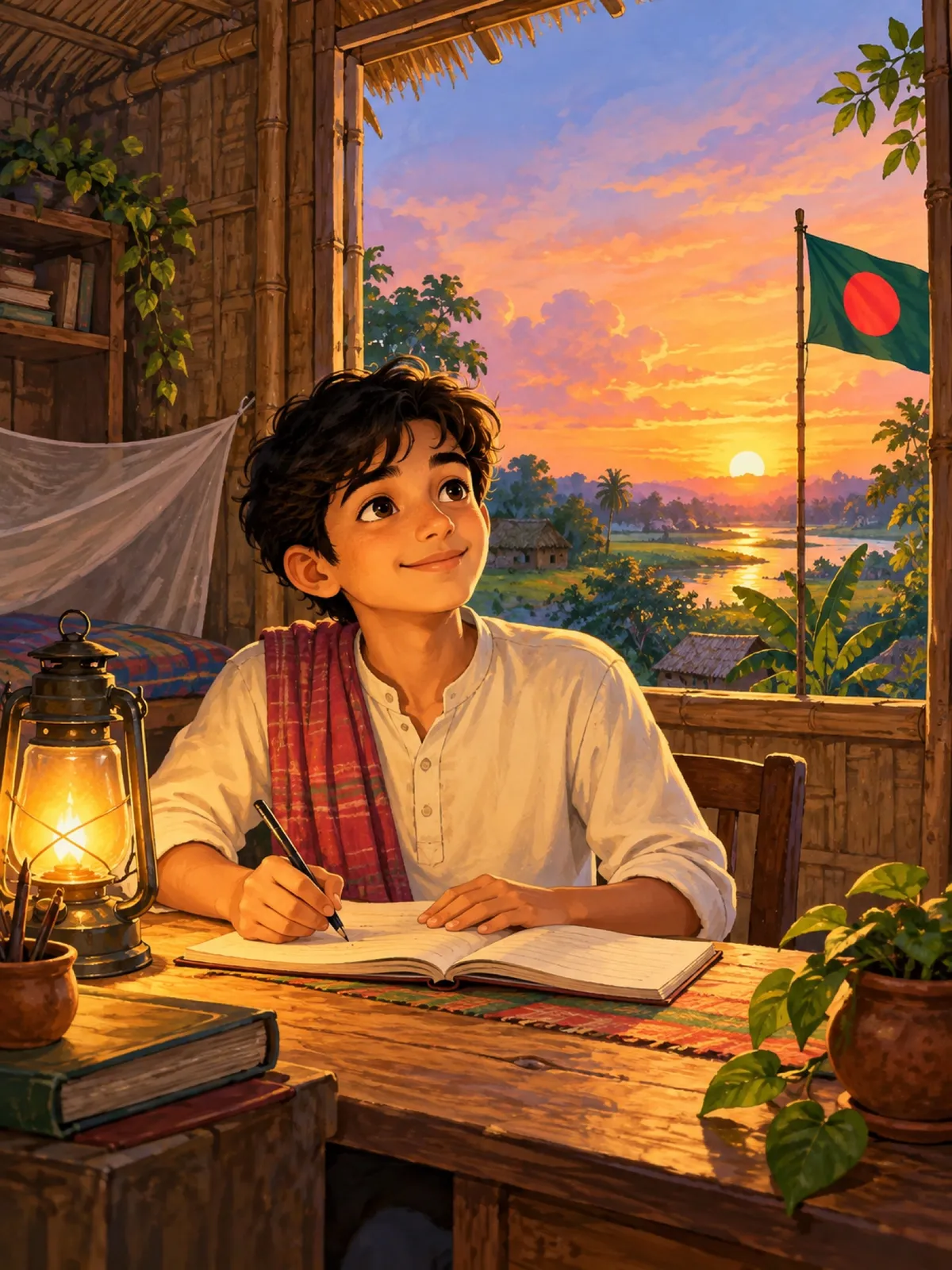
রাতে কুপির কাঁপা আলোয় সে ডায়েরি খুলত। একদিন লিখল—“আজ খুব ভয় লেগেছিল। পা কাঁপছিল, বুক ধুকপুক করছিল। ভয় আছে, তবু কাজ থামানো যাবে না।” লেখার পর মনটা একটু হালকা হতো। খাতাটা যেন তার সবচেয়ে বিশ্বস্ত বন্ধু, যাকে সব কথা বলা যায়।
At night, by the flickering light of an oil lamp, he opened his diary. One day he wrote, “I was very scared today. My legs were shaking and my heart was pounding. I am afraid, but the work must not stop.” After writing, his heart felt a little lighter. The notebook had become his most trusted friend, one he could tell anything.
দিনের পর দিন তার লেখায় যুদ্ধের কষ্টের পাশাপাশি জমা হতে লাগল মানুষের মমতার গল্পও। এক পরিবার নিজেদের ছোট্ট ঘরেই আরেক পরিবারকে আশ্রয় দিয়েছে। এক বৃদ্ধা নিজের ভাগের এক মুঠো মুড়ি তুলে দিয়েছেন ক্ষুধার্ত এক শিশুর হাতে। এক মাঝি রাতভর নৌকা বেয়ে মানুষকে নিরাপদে পৌঁছে দিয়েছেন। কেউ কেউ শুধু একটা কথা বলে সাহস জুগিয়েছেন—“ভয় পেয়ো না, ভোর আসবেই।”
Page after page, alongside the hardships of war, his diary gathered stories of kindness. One family had sheltered another in their own tiny home. An old woman had given her share of puffed rice to a hungry child. A boatman had rowed all night to carry people to safety. Some people offered courage with just a few words: “Don’t be afraid. Morning will come.”
অনেক কঠিন মাস পেরিয়ে এল ডিসেম্বর। এক সকালে চারদিক ভরে উঠল আনন্দের ধ্বনিতে, ঘরে ঘরে উড়ল লাল-সবুজ পতাকা। সেদিন রাশেদ ডায়েরিতে লিখল—“আজ আমরা স্বাধীন। অনেকে আর ফিরে আসেননি; তাঁদের কথা আমি কখনো ভুলব না।”
After many hard months, December arrived. One morning the air filled with joyful shouts, and red-and-green flags flew from house after house. That day Rashed wrote in his diary, “Today we are free. Many did not come back; I will never forget them.”
খাতার পাতা উল্টাতে উল্টাতে রাশেদ বুঝল, ইতিহাস শুধু বড় বড় ঘটনার নাম আর তারিখ নয়। সাধারণ মানুষের সাহস, কষ্ট, দায়িত্ব আর আশাও ইতিহাসের অংশ। তার ছোট্ট ডায়েরি সেই মানবিক স্মৃতিগুলো যত্ন করে ধরে রাখল, যাতে পরের প্রজন্ম জানতে পারে—কত মানুষের ভালোবাসা আর ত্যাগে এসেছে এই স্বাধীনতা।
Turning the pages of his notebook, Rashed understood that history is not only names of great events and dates. The courage, suffering, duty and hope of ordinary people are part of history too. His little diary carefully kept those human memories, so that the next generation would know how much love and sacrifice had brought this freedom.
⭐ গল্পের শিক্ষাThe lesson
ইতিহাস শুধু তারিখ নয়; সাধারণ মানুষের সাহস, ত্যাগ আর মানবিকতাই ইতিহাস গড়ে।History is not just dates; it is shaped by the courage, sacrifice and kindness of ordinary people.
🌟 শেষ!The End! 🌟